
The NPM Audit Trap: A Thursday Morning Tragedy
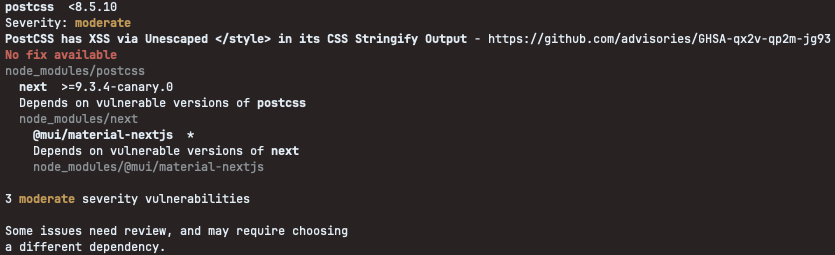
We’ve all been there. It’s Tuesday afternoon, and you’re on fire. Your user story is complete, the logic is elegant, and the test suite is glowing green. You push your code, confident that Thursday’s deployment will be a victory lap.
Then, Thursday morning arrives. You trigger the pipeline, grab a coffee (Colombian Coffee of course!), and wait for the “Success” notification.
Instead, you get a sea of red.
The Ambush
The culprit? npm audit.
Somewhere between Tuesday’s sign-off and Thursday’s rollout, a new vulnerability was reported. It’s not even in a library you added; it’s a transitive dependency—a friend of a friend of a package you installed three months ago.
The Five Stages of Dependency Grief
Denial: “It’s probably just a glitch in the CI/CD runner. Let me restart the job.” (It’s not a glitch).
Bargaining: npm audit fix. You pray to the terminal gods for a patch. But wait—there’s no fix available because the vulnerability is so fresh the maintainers haven’t even seen it yet. Or even worse, the need to update to a totally new version.
Realization: You see the message: No fix available. You are a hostage.
Despair: You look at the “Critical” flag blocking your production merge. You didn’t write this code. You can’t fix this code.
Acceptance (and a few tears): You realize your “simple deployment” has just turned into a deep dive into GitHub issues, security overrides, or the painful task of explaining to the Product Owner why a “ready” story is now stuck in security limbo.
The Reality of Modern Web Dev
This is the tax we pay for the incredible speed of the Node.js ecosystem. We stand on the shoulders of giants, but sometimes those giants have tiny, unpatched cracks in their armor.
Conclusion
To my fellow devs facing a “Red” pipeline today because of a zero-day transitive dependency: I see you. I’ve been there. And yes, it’s okay to cry a little before you start manual patching.
And as always, happy coding!.